
Navigation
$200.00
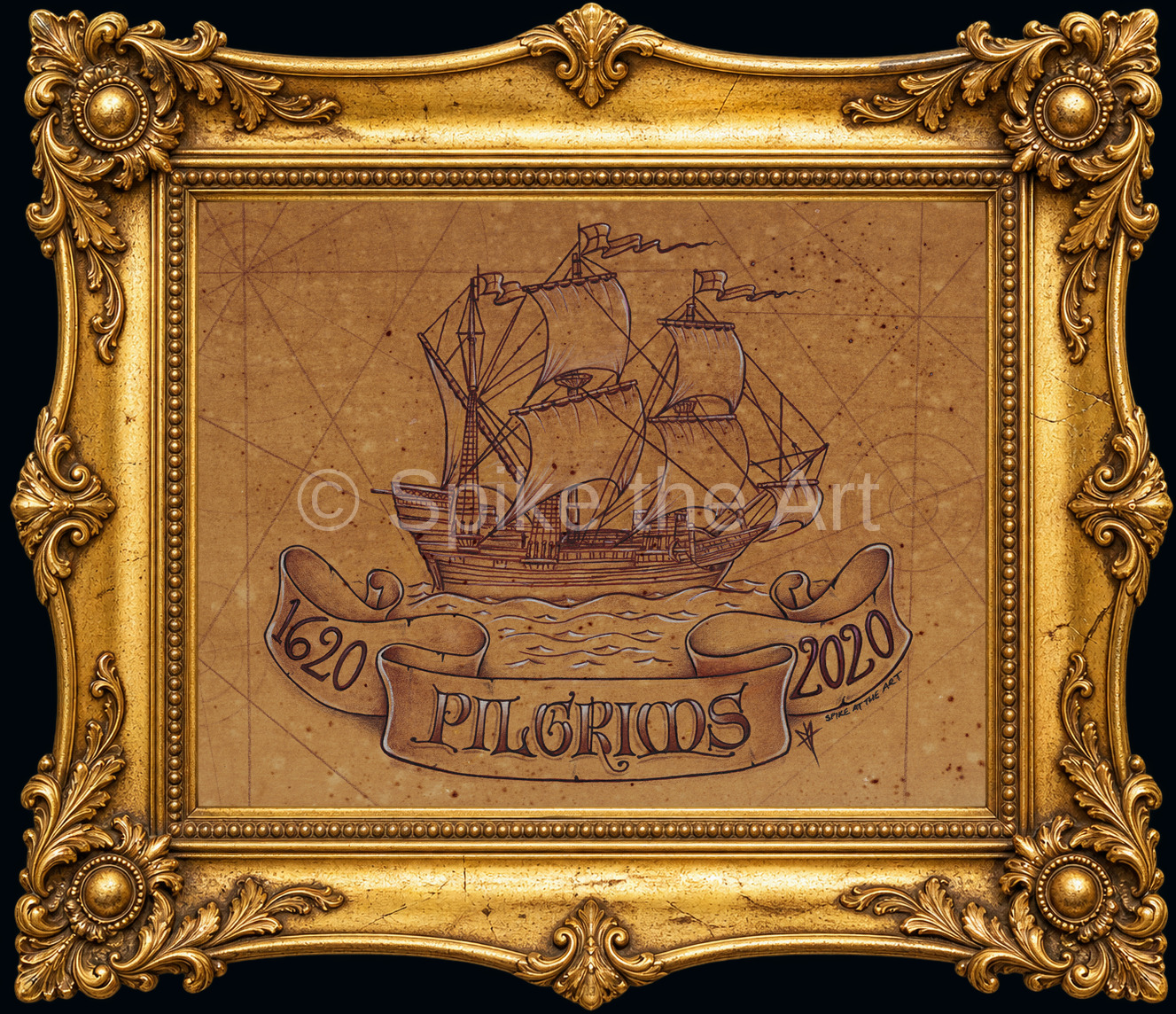
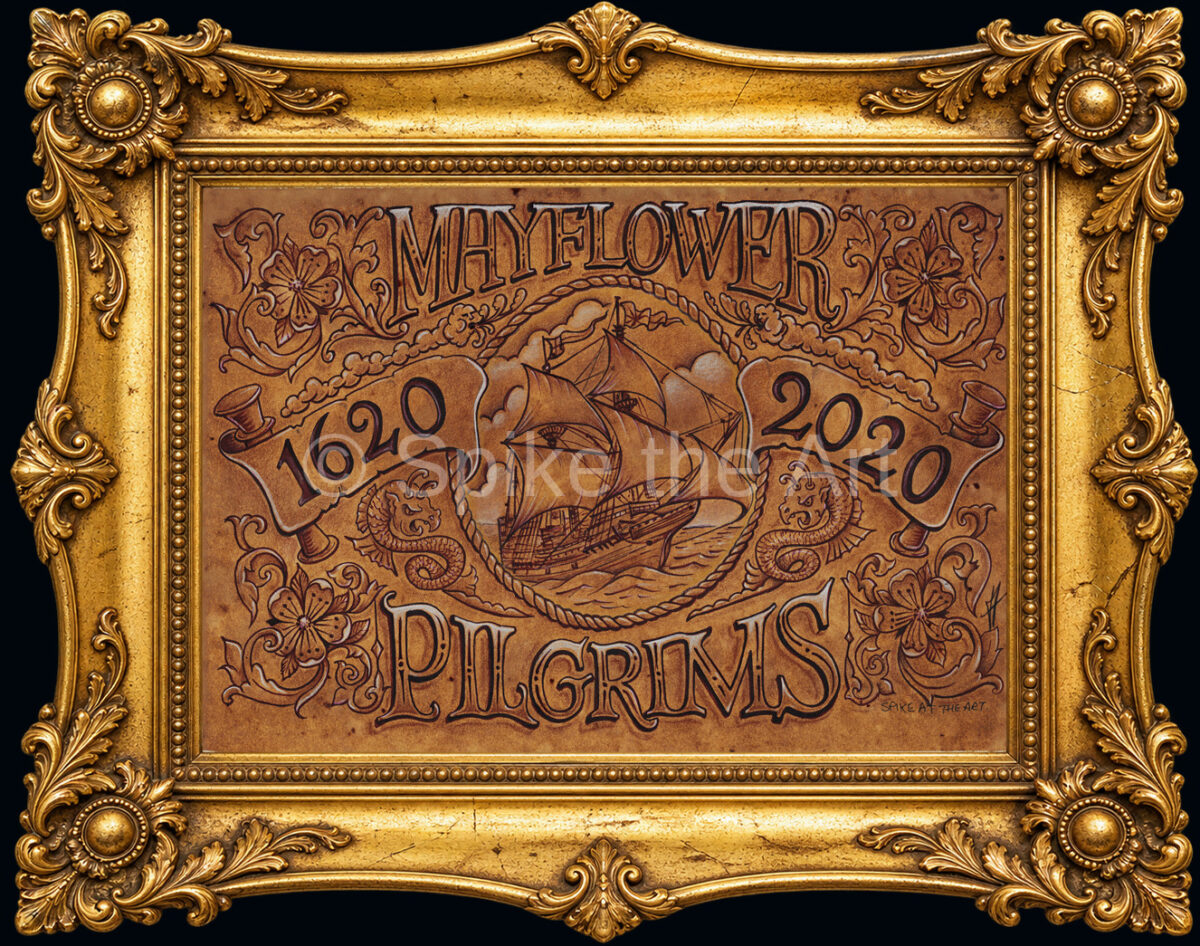
Navigation captures the people at the heart of one of history’s most remarkable journeys — the 1620 voyage from Plymouth across the Atlantic aboard the Mayflower. Set against the visual language of an old navigational chart, the artwork places the ship at the centre of the story while the 1620–2020 banner connects that historic voyage with its four-hundredth anniversary.
Mike Hicks brings together the ship, the ocean and the unmistakable imagery of exploration to create a piece that reflects both the scale of the journey and the people who made it. They left behind everything familiar and sailed towards a destination they could only imagine, facing an ocean, an uncertain future and a journey that would ultimately become part of world history. Navigation is a celebration of that courage — and of the extraordinary journey that began from Plymouth four centuries ago.
*Gold frame is for illustration purposes only. Click here for framing and printing ideas & options.
Only 250 available worldwide
The Story Behind The Artwork
Navigation tells the story of the people at the heart of one of the most famous voyages in maritime history. In 1620, a group of passengers left England aboard the Mayflower, sailing from Plymouth towards an uncertain future across the Atlantic. The ship itself has become one of the most recognisable symbols of that journey, but behind the familiar image of the Mayflower were ordinary people making an extraordinary decision — to leave behind the world they knew and undertake a voyage into the unknown.
Mike Hicks has chosen to capture that story through the visual language of an old navigational chart. The parchment tones, compass lines, sailing ship and decorative typography give the artwork the character of a historical document, while the central vessel provides a focal point for the journey itself. The design deliberately looks back towards an earlier age of exploration, when the Atlantic was a vast and unpredictable barrier and a voyage across it could take weeks with no certainty about what conditions would be encountered along the way. The result is an artwork that connects the physical journey of the Mayflower with the human story of the people who stepped aboard her.
The People Behind The Voyage
It is easy, centuries later, to think of the Pilgrims as historical figures who were always destined to become part of a much larger story. In reality, they could not have known what the future would hold. When they boarded the Mayflower, they were leaving behind familiar places, familiar lives and a world they understood. Ahead of them was an ocean they could not simply cross in a matter of hours, and beyond that ocean was a new world about which they could know very little. The decision to make that journey required commitment, resilience and a willingness to accept an enormous amount of uncertainty.
The Mayflower therefore became far more than a means of transportation. For the duration of the crossing, she was their shelter, their home and their connection to everything they had left behind. Families, individuals and crew shared the confined world of the ship while the Atlantic stretched around them. Every mile carried them further from England and closer to a destination that represented possibility but also considerable unknowns. Navigation is intended to capture that human element — the people, the ship and the immense distance between the life they had known and the future they hoped to create.
1620 — The Journey Begins
The year 1620 is central to the artwork because it marks the beginning of the voyage that would become so deeply embedded in history. From Plymouth, the Mayflower headed west into the Atlantic, carrying her passengers towards Cape Cod and ultimately towards a new chapter in their lives. There were no modern navigation systems, no engines and no instant communication with the outside world. Direction depended upon the knowledge and experience of those aboard, together with the navigational instruments and observations available to them.
The journey across the Atlantic was therefore a genuine undertaking into uncertainty. The ocean itself became part of the story, with wind, weather and distance determining the progress of the ship. The artwork's chart-like appearance reflects that world of navigation and exploration, where maps were essential tools but the reality beyond the marked coastline could still be largely unknown. Every line drawn across the chart represents more than geography; it suggests movement, distance and the determination required to continue towards a destination that existed somewhere beyond the horizon.
The Mayflower And The New World
At the centre of Navigation is the Mayflower herself. Her sails and rigging rise above the waves while the surrounding chartwork places her within the much larger story of Atlantic exploration. The ship represents the physical connection between two worlds — the familiar shores of England and the distant coastline that awaited them. Without the Mayflower, there could have been no voyage in the form we remember today. She carried the people, possessions and hopes of those aboard across an ocean that had to be faced one day at a time.
That connection between Plymouth and the New World is an important part of the artwork. Plymouth was the departure point for the final stage of the Mayflower's journey, and the city's association with the voyage has endured ever since. For Mike Hicks, creating this work from Plymouth gives the story a particularly personal connection. The places represented within the artwork are not simply distant historical locations; they form part of the history of the city in which he lives and works. The sea that stretches beyond Plymouth today is the same Atlantic that those aboard the Mayflower had to cross more than four hundred years ago.
1620–2020
The 1620–2020 banner incorporated into the artwork marks four hundred years since the historic voyage. It provides a deliberate bridge between the original journey and the modern world, reminding us that the story has continued to be remembered long after the people involved were gone. Four centuries separate the voyage from the anniversary represented in the artwork, yet the basic elements remain remarkably easy to recognise — a ship, an ocean, a departure point and people willing to leave the familiar behind in search of something beyond the horizon.
That passage of time is part of what makes historical artwork so fascinating. We know what happened afterwards, but the people aboard the Mayflower did not. They experienced the journey without the benefit of hindsight. They could not know which moments would eventually be remembered, which places would become historically significant or how their voyage would be interpreted generations later. Navigation therefore looks backwards from the present while trying to retain something of the uncertainty that existed at the beginning of the journey.
A Journey Into History
Ultimately, Navigation is not simply an artwork about a ship crossing an ocean. It is about the people who made the decision to undertake that journey and the extraordinary circumstances surrounding their departure. The Mayflower provides the visual centre of the piece, but the real subject is the human story behind the vessel — courage, uncertainty, hope and the willingness to step into a future that could not yet be seen.
Mike Hicks uses historical imagery, nautical symbolism and the appearance of an aged navigational chart to bring that story into the present. The artwork is designed to feel as though it belongs to the history it represents, while still remaining unmistakably an interpretation rather than a literal reconstruction. Every element contributes to the sense of a journey beginning: the ship leaving the shore, the chart opening towards the Atlantic and the people aboard moving steadily towards an unknown horizon. More than four hundred years later, that journey remains one of the enduring stories associated with Plymouth and the wider history of exploration.
Artwork Details
- Title: Navigation
- Artist: Mike Hicks — Spike the Art
- Location: Plymouth, Devon, England
- Theme: The Mayflower • The Pilgrims • Plymouth • 1620 • Exploration • Maritime History • The Atlantic Voyage
- Edition: Limited edition of 500
- Authentication: Individually serialised and registered through WooSerialiZe
Reviews
There are no reviews yet.