
Atlantic
$200.00
For anyone setting out across the Atlantic in a sailing ship, the wind was both friend and master.
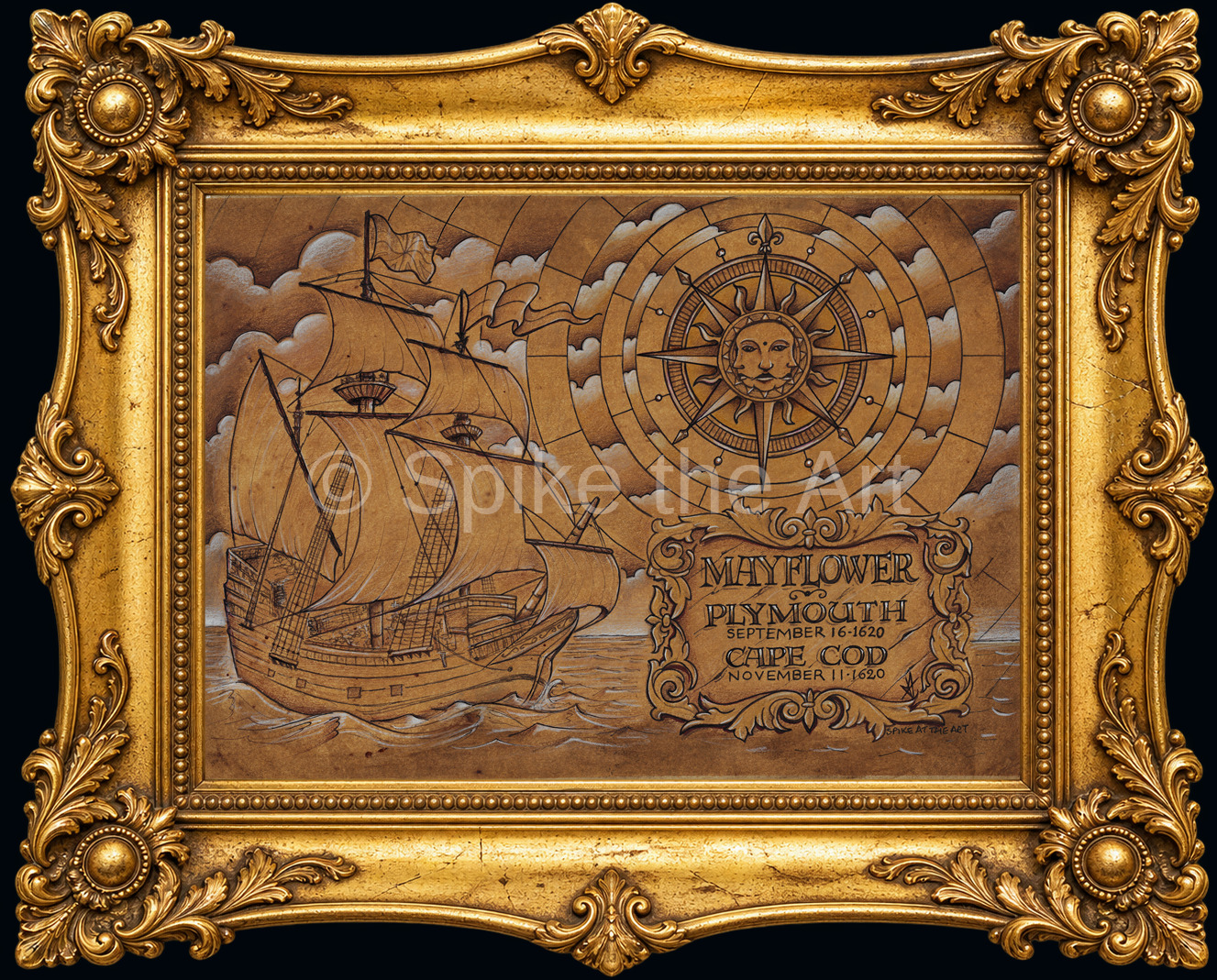
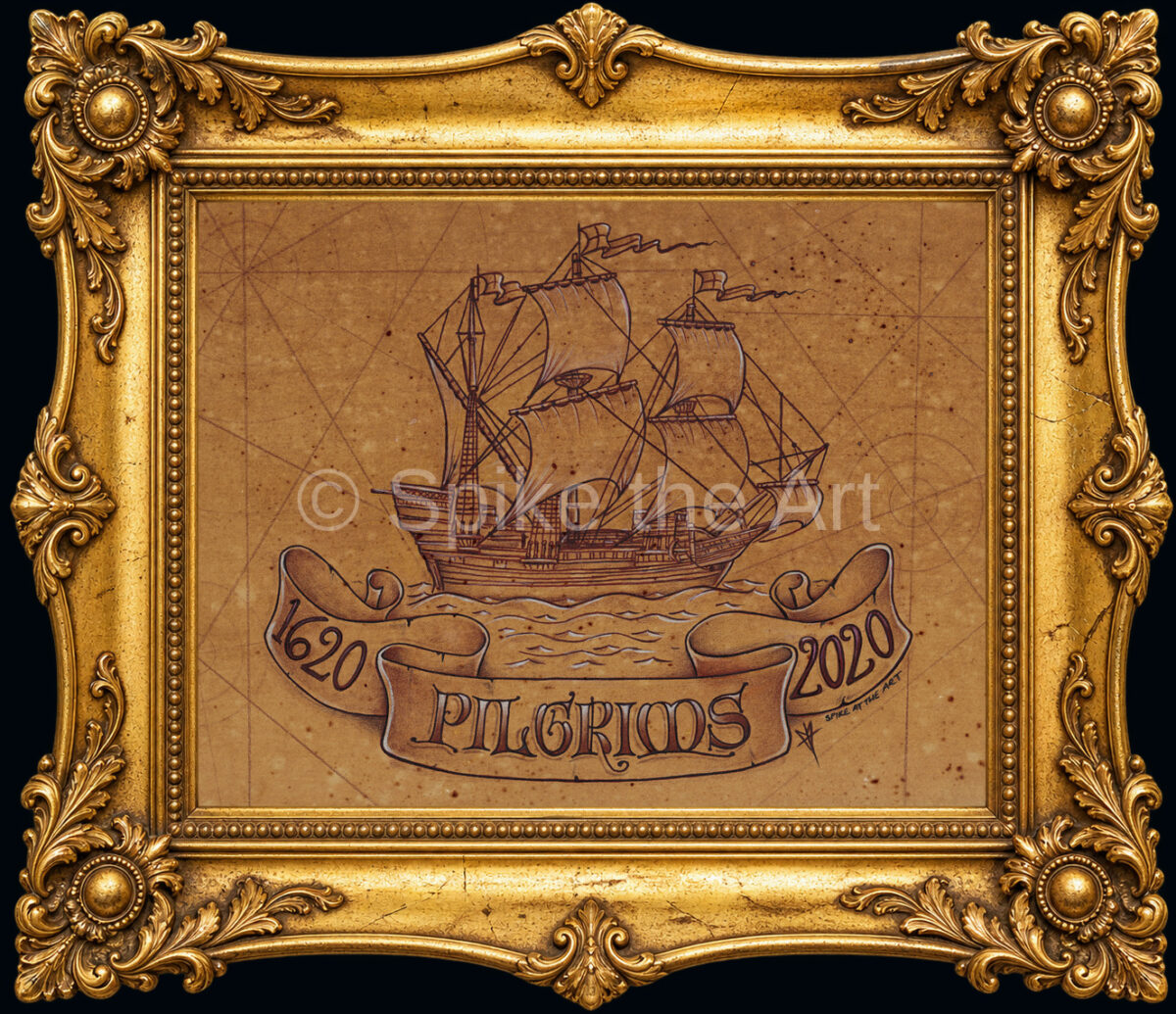
Atlantic brings together the Mayflower, the open sea and a compass marked by a radiant sun — symbols of navigation, direction and the hope of a successful passage. At the heart of the artwork sits the Mayflower’s historic journey, from Plymouth in September 1620 to Cape Cod in November. Mike Hicks combines nautical imagery with ornate decorative elements and the visual language of traditional maritime illustration to create a piece that feels rooted in the age of sailing.
*Gold frame is for illustration purposes only. Click here for framing and printing ideas & options.
Only 250 available worldwide
The Story Behind The Artwork
Before engines, GPS and modern navigation, a sailing ship was at the mercy of the sea and the wind. A vessel could be beautifully built, its course carefully plotted and its crew experienced, but ultimately the journey depended upon forces far beyond their control. The wind could carry a ship towards its destination.
It could slow the journey. It could change direction. Or it could make the ocean dangerous. For the passengers and crew of the Mayflower, sailing across the Atlantic in 1620 meant placing themselves entirely within that environment. Atlantic takes that fundamental reality of the voyage and turns it into the central idea of the artwork.
The Mayflower dominates the composition, sails filled as she moves across the water. Above and behind the ship sits a striking sun-like compass — part navigation instrument, part symbol of guidance and hope. Together, the two elements tell a remarkably simple story. A ship needs a direction. A ship needs wind. And sometimes, it needs a little luck. The historical panel within the artwork records the Mayflower's journey:
PLYMOUTH
SEPTEMBER 6 • 1620
and
CAPE COD
NOVEMBER 11 • 1620
Those dates place the artwork within a very real journey — one that began from the shores of England and eventually brought the Mayflower across the Atlantic to Cape Cod. But Mike Hicks isn't attempting to create a literal historical chart of the voyage. Instead, the artwork uses the journey as a starting point for something more universal.
The Wind
The title Atlantic comes from an idea that feels almost inseparable from the age of sailing. For a modern traveller, a journey can be planned with remarkable precision. For a sailor crossing an ocean under canvas, there was an element of surrender involved. The wind decided how quickly the ship travelled. The sea determined how she moved. The weather could change everything. And the people aboard had to adapt.
That makes the simple idea of wishing someone safe wind particularly powerful. It isn't a promise that the journey will be easy. It is a hope that the conditions will be kind. That the ship will find favourable winds. That the sea will allow passage. And that those who leave the shore will eventually see it again.
The Compass And The Sun
The compass at the centre of Atlantic is more than a decorative nautical symbol. It represents direction. When the sea surrounds you on every side and the horizon offers few landmarks, knowing which way you are travelling becomes fundamental. The compass therefore becomes a visual counterpoint to the wind. The compass tells you where you need to go.
The wind determines, to some extent, how you get there. Mike has combined the two within the same composition, creating a visual representation of the relationship between navigation and nature. The sun at the centre adds another layer. For centuries, sailors have looked towards the sky for signs, direction and time. Here it becomes almost a symbol of hope — a light above the vessel as it moves into the unknown.
A Journey From Plymouth
There is also an important connection between Atlantic and the place from which the Mayflower voyage began. Plymouth. For Spike the Art, that connection is particularly significant. Mike Hicks is creating this artwork from Plymouth, centuries after the Mayflower left these shores.
- The same city.
- The same sea.
- The same horizon.
But an entirely different generation looking back at the journey. The historical panel within the artwork deliberately anchors the piece to Plymouth and Cape Cod, reminding us that this was not simply an imagined voyage. It happened. A ship really did leave these shores. People really did spend weeks crossing the Atlantic.
And on 11 November 1620, the Mayflower reached Cape Cod. Four centuries later, the voyage remains one of the most enduring maritime stories in history.
A Wish For The Journey
Ultimately, Atlantic is about something very human. Whenever someone leaves home, there is uncertainty about what lies ahead. We might know the destination. We might have a plan. But we can never completely control the journey. The passengers aboard the Mayflower could not control the Atlantic, the weather or the wind. They could only prepare, set their course and sail. And perhaps that is why the title feels so appropriate.
Artwork Details
Title: Atlantic
Artist: Mike Hicks — Spike the Art
Location: Plymouth, Devon, England
Theme: The Mayflower • Sailing • Navigation • Plymouth • Cape Cod • The Atlantic Voyage
Edition: Limited edition of 500
Authentication: Individually serialised and registered through WooSerialize.
Reviews
There are no reviews yet.