
Setting Sail
$200.00
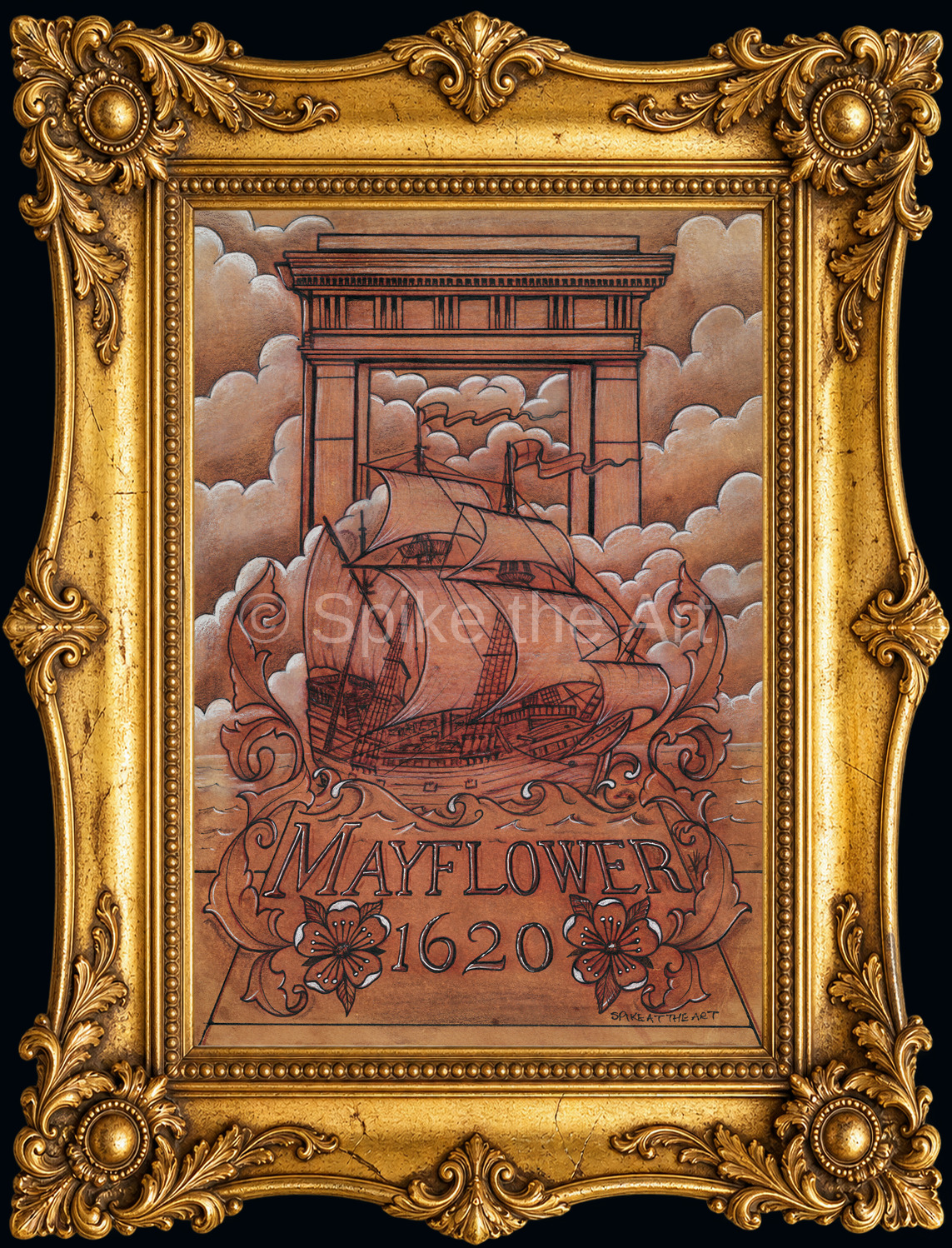
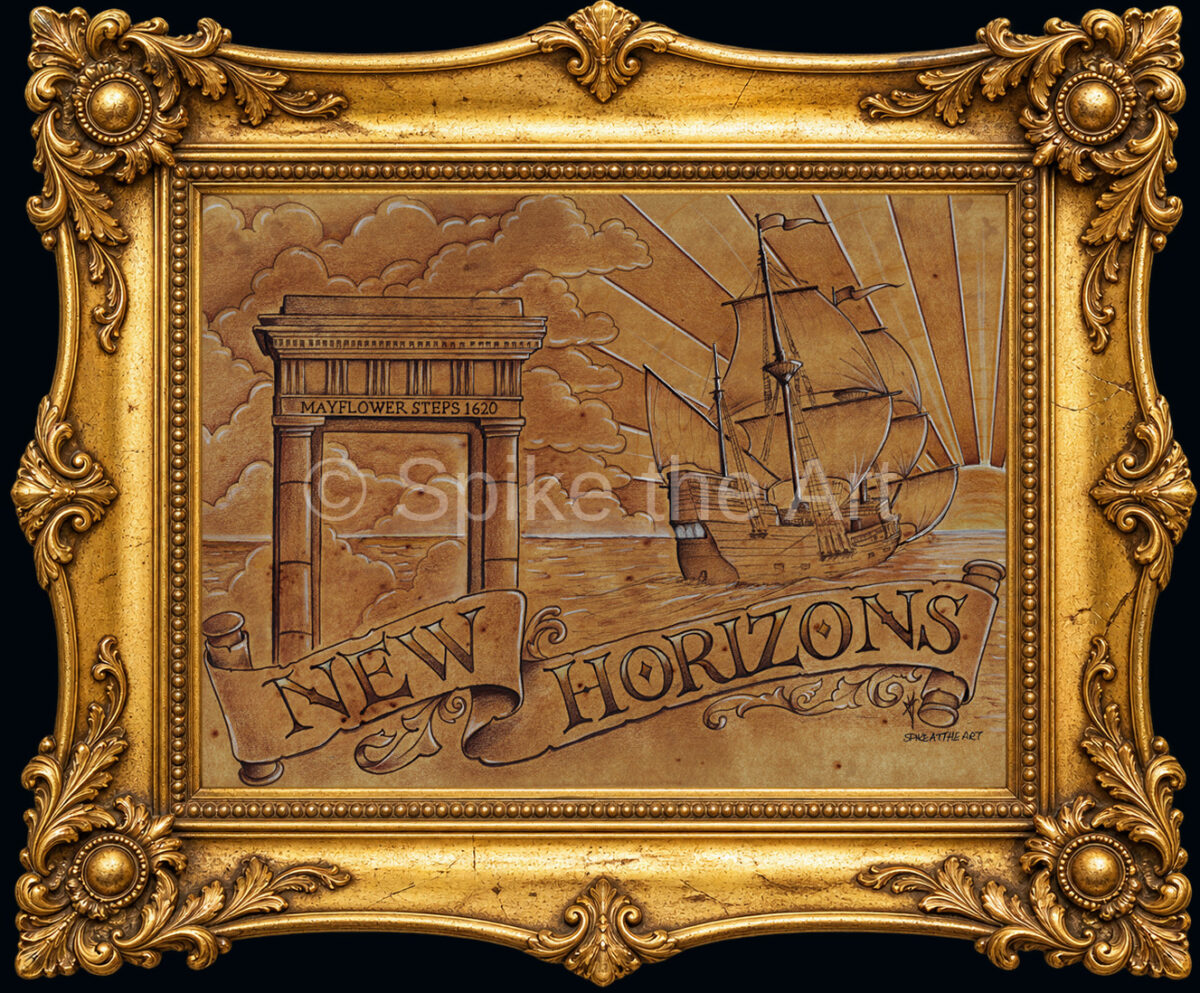
Setting Sail captures the historic connection between Plymouth and the Mayflower’s 1620 voyage across the Atlantic. The ship sits beneath the iconic architectural gateway of the Steps, surrounded by waves, clouds and nautical detail, creating a powerful image of departure and exploration.
For Mike Hicks, the artwork represents more than a famous ship — it captures the moment when the familiar world was left behind and a new journey began.
From the shores of Plymouth towards an uncertain horizon, Setting Sail celebrates one of the city’s most enduring connections with history.
The artwork also reflects Plymouth’s place in that story — a city shaped by the sea, where journeys have begun for centuries. Setting Sail brings that sense of place and history together in a piece that looks back to 1620 while keeping its focus firmly on the city where the voyage began.
*Gold frame is for illustration purposes only. Click here for framing and printing ideas & options.
Only 250 available worldwide
The Story Behind The Artwork
Setting Sail brings the story of the 1620 voyage back to where that journey is so strongly remembered — Plymouth. The artwork places the Mayflower beneath the distinctive architectural form associated with the Mayflower Steps, creating a powerful visual connection between the city, the ship and the voyage across the Atlantic. The vessel sits at the heart of the composition, surrounded by rolling clouds, flowing nautical decoration and the unmistakable inscription MAYFLOWER 1620. Rather than simply depicting a ship at sea, Mike Hicks has created an image about departure — that extraordinary moment when a familiar shore is behind you and an entirely unknown horizon lies ahead.
There is something particularly powerful about representing the Mayflower through Plymouth. The story is often told as though it begins with the ship already far out in the Atlantic, but every voyage has a beginning. Before the sails were filled and the coastline disappeared, there was a place from which the journey started. Plymouth provides that sense of origin within the artwork. The architectural structure surrounding the ship becomes almost like a gateway, framing the Mayflower as she moves from the known world towards the unknown. It gives the composition a sense of movement and transition, while the surrounding decorative elements connect the artwork to the maritime traditions and historical imagery that have become so closely associated with the voyage.
The Mayflower Steps
Setting Sail has become one of Plymouth's most recognisable reminders of the 1620 voyage and the city's connection with the Mayflower story. They provide a physical point of reference for a journey that took place more than four centuries ago, allowing a historical event that can otherwise feel impossibly distant to remain connected to a real place. For Mike Hicks, creating artwork inspired by this part of Plymouth's history is particularly meaningful because the story is not being interpreted from somewhere thousands of miles away. It begins in the city itself, looking out towards the same sea that once carried the Mayflower westwards.
In the artwork, the Steps are interpreted rather than simply reproduced as a literal architectural study. The strong vertical lines of the structure create a dramatic frame around the ship, while the clouds and ornamental waves give the image a sense of movement and atmosphere. The result is almost theatrical — the Mayflower appears within a gateway, poised between two worlds. The familiar architecture of Plymouth stands behind the vessel, while the ship points towards everything that lies beyond it. It is a visual representation of the moment when history moves from one place into another.
Plymouth And The Atlantic
For the people aboard the Mayflower, the Atlantic represented an enormous distance and an uncertain future. Once the ship had left the English coast, there was no quick return and no modern means of communication with the world they had left behind. The voyage had to be completed under sail, with the progress of the ship dependent upon wind, weather, navigation and the experience of those aboard. Every mile travelled westward increased the distance between the passengers and the familiar places they had known.
That sense of distance is an important part of Setting Sail. The ship is not shown simply as an object from the past; it represents movement, possibility and the decision to leave one world behind in search of another. The decorative waves beneath the vessel reinforce the idea of the Atlantic as both a physical and symbolic boundary. On one side was England and everything that was familiar. Beyond the horizon was the New World — a destination that represented possibility, but also uncertainty and considerable risk. Plymouth was the point from which that extraordinary passage began.
A Gateway To The New World
The architectural form surrounding the Mayflower gives the artwork another layer of meaning. It can be viewed as a gateway — a passage between one chapter and the next. The ship sits within that gateway as though history itself is passing through it. The symbolism is deliberately simple: behind the Mayflower is the world she was leaving, while ahead lies the vast Atlantic and everything that would eventually follow. The composition therefore turns a familiar historical subject into something more universal — the moment when a person, a group or even an entire generation chooses to step beyond what is known.
The Mayflower's journey has been remembered for more than four hundred years because of what happened after that departure. But hindsight can make historical events appear inevitable. They were not. Those aboard the ship could not see the future waiting for them. They could only see the sea ahead and trust that the journey would eventually bring them to another shore. Setting Sail attempts to capture something of that uncertainty while keeping Plymouth firmly at the centre of the story — the place where the voyage became real and where the final preparations were made before the Mayflower disappeared towards the horizon.
1620 — A Moment That Changed History
The inscription MAYFLOWER 1620 anchors the artwork to the year that has become inseparable from the voyage. Four centuries later, the numbers still carry enormous historical weight. They represent not only the year in which the Mayflower crossed the Atlantic, but the beginning of a story that would become part of the history of Plymouth, England and the United States. By placing those numbers prominently beneath the ship, Mike Hicks gives the artwork a strong sense of identity while allowing the surrounding imagery to tell the larger story of the journey.
There is also something fitting about the way the artwork combines historical imagery with an almost timeless atmosphere. The Mayflower itself belongs to the seventeenth century, yet the ideas represented by the voyage — departure, uncertainty, courage, exploration and the search for a new beginning — remain relevant. The ship may have crossed the Atlantic more than four hundred years ago, but the emotional experience of standing on a shore and wondering what lies beyond the horizon is something that has never really changed.
From Plymouth To The Horizon
At its heart, Setting Sail is an artwork about beginnings. It takes a familiar Plymouth landmark and places it within the much larger story of the Mayflower, creating a visual connection between the physical place where the voyage is remembered and the ship that carried its passengers towards the New World. The Mayflower becomes the focal point, but the surrounding architecture, clouds, waves and decorative elements all contribute to the sense that something is about to happen — that the ship is on the threshold of a journey that will carry it far beyond the coastline.
For Mike Hicks, this is precisely what makes historical artwork so compelling. History is not simply a collection of dates and names; it is made up of places, decisions and moments that once happened to real people. Setting Sail takes one of those moments and interprets it through the visual language of nautical and historical art. From the architecture of Plymouth to the ship beneath the clouds, every element points towards the same idea — a journey beginning, a horizon waiting and a story about to unfold. More than four hundred years later, the Mayflower still sails in our imagination, and Plymouth remains the place from which that story continues to be remembered.
Artwork Details
- Title: Setting Sail
- Artist: Mike Hicks — Spike the Art
- Location: Plymouth, Devon, England
- Theme: The Mayflower • Plymouth • 1620 • Maritime History • Exploration • The Atlantic Voyage
- Edition: Limited edition of 500
- Authentication: Individually serialised and registered through WooSerialiZe
Reviews
There are no reviews yet.